Jeju Island: Why South Korea's Volcanic Island Is a World-Class Destination
 Muhammad Fikri Gunawan · · 9 min read
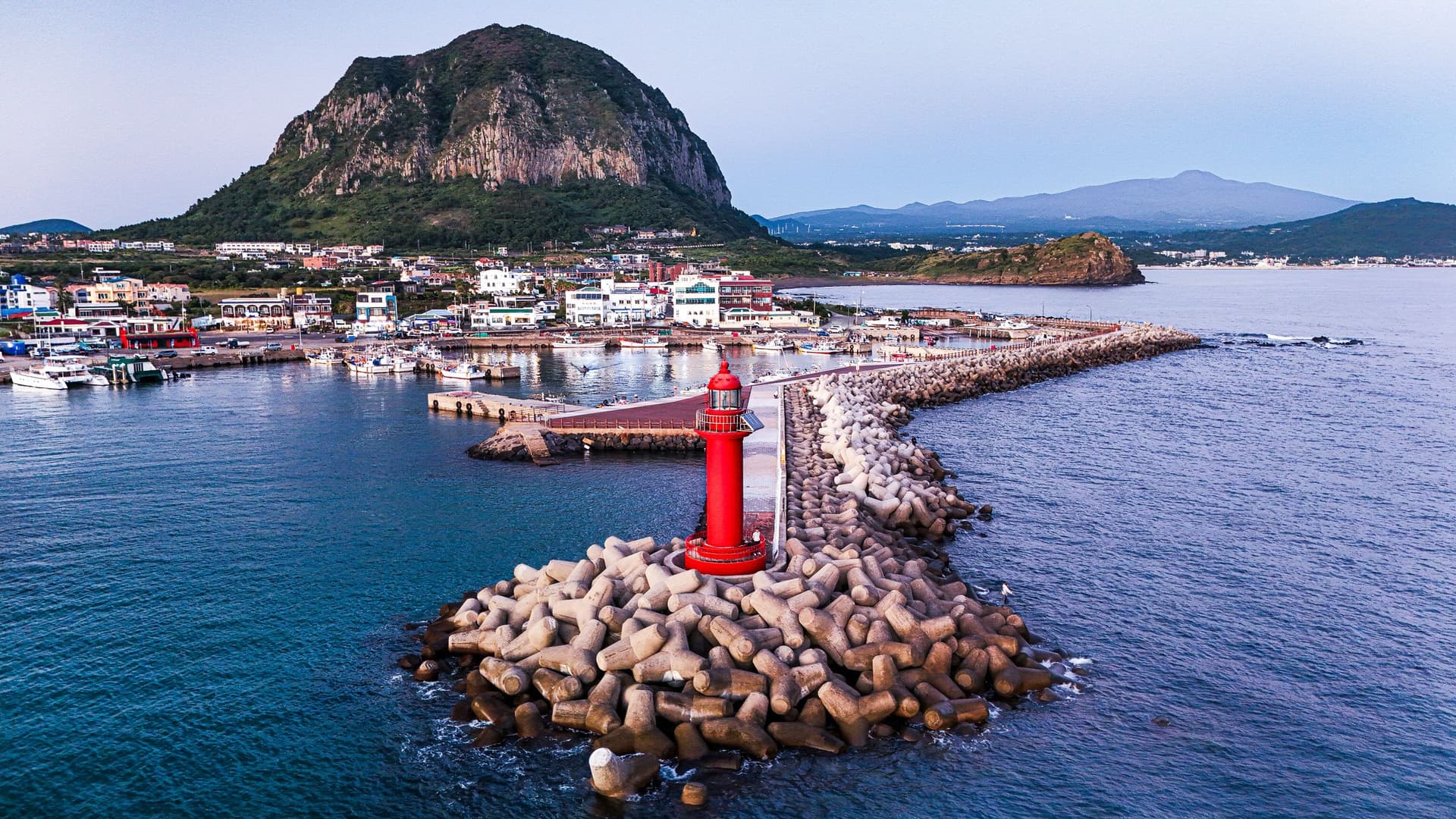
Jeju is South Korea's largest island and one of the few places with three UNESCO designations. Here is why it is a world-class destination, with the best places, food and a 3-day plan.
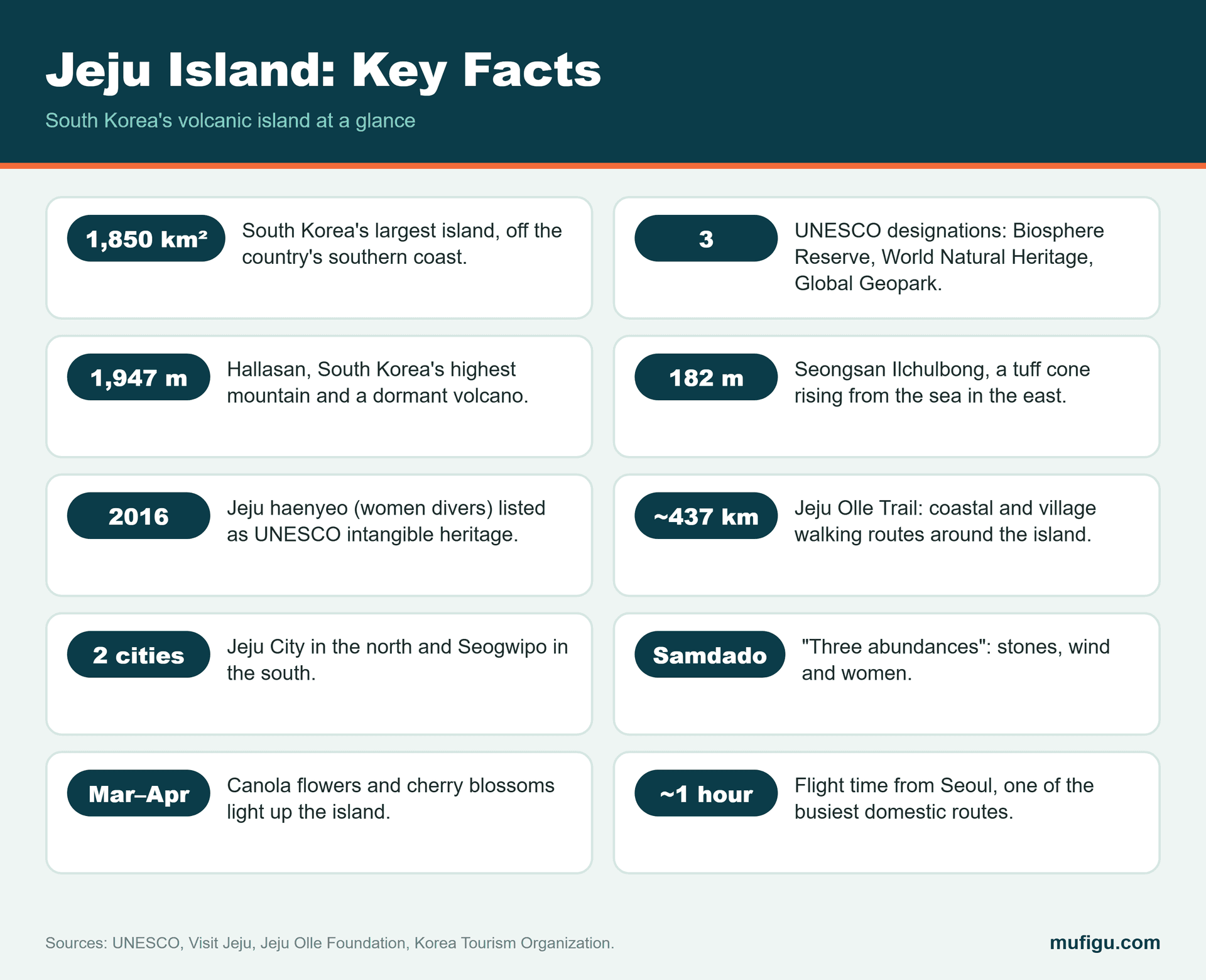
Jeju is South Korea's largest island and one of the few places on Earth with three UNESCO designations: a Biosphere Reserve (2002), a World Natural Heritage site (2007) and a Global Geopark (2010). Formed by volcanic eruptions, it packs a 1,947 m volcano, lava tubes, basalt cliffs, waterfalls, beaches, coastal walking trails and a living tradition of women divers into an island of about 1,850 square kilometres, roughly an hour's flight from Seoul.
This guide explains what makes Jeju a world-class destination, the best places to visit, what to eat, how to get there, the best time to go and a simple 3-day itinerary.
Key takeaways
- Jeju is often described as the only place with all three UNESCO labels: Biosphere Reserve, World Natural Heritage and Global Geopark.
- Its World Heritage property, Jeju Volcanic Island and Lava Tubes, includes Hallasan, the Seongsan Ilchulbong tuff cone and the Geomunoreum lava tube system.
- Hallasan (1,947 m) is South Korea's highest mountain, and the Jeju haenyeo divers have been on UNESCO's intangible heritage list since 2016.
- The Jeju Olle Trail offers roughly 430 km of coastal and village walking routes.
- Spring brings canola flowers and cherry blossoms, autumn brings silver grass, and winter brings camellias, so there is a good season for most travellers.
- Entry rules depend on your passport and change often, so check the official K-ETA and embassy pages before you book.
Jeju at a glance
A short introduction to Jeju: an island built by volcanoes
How the island was formed
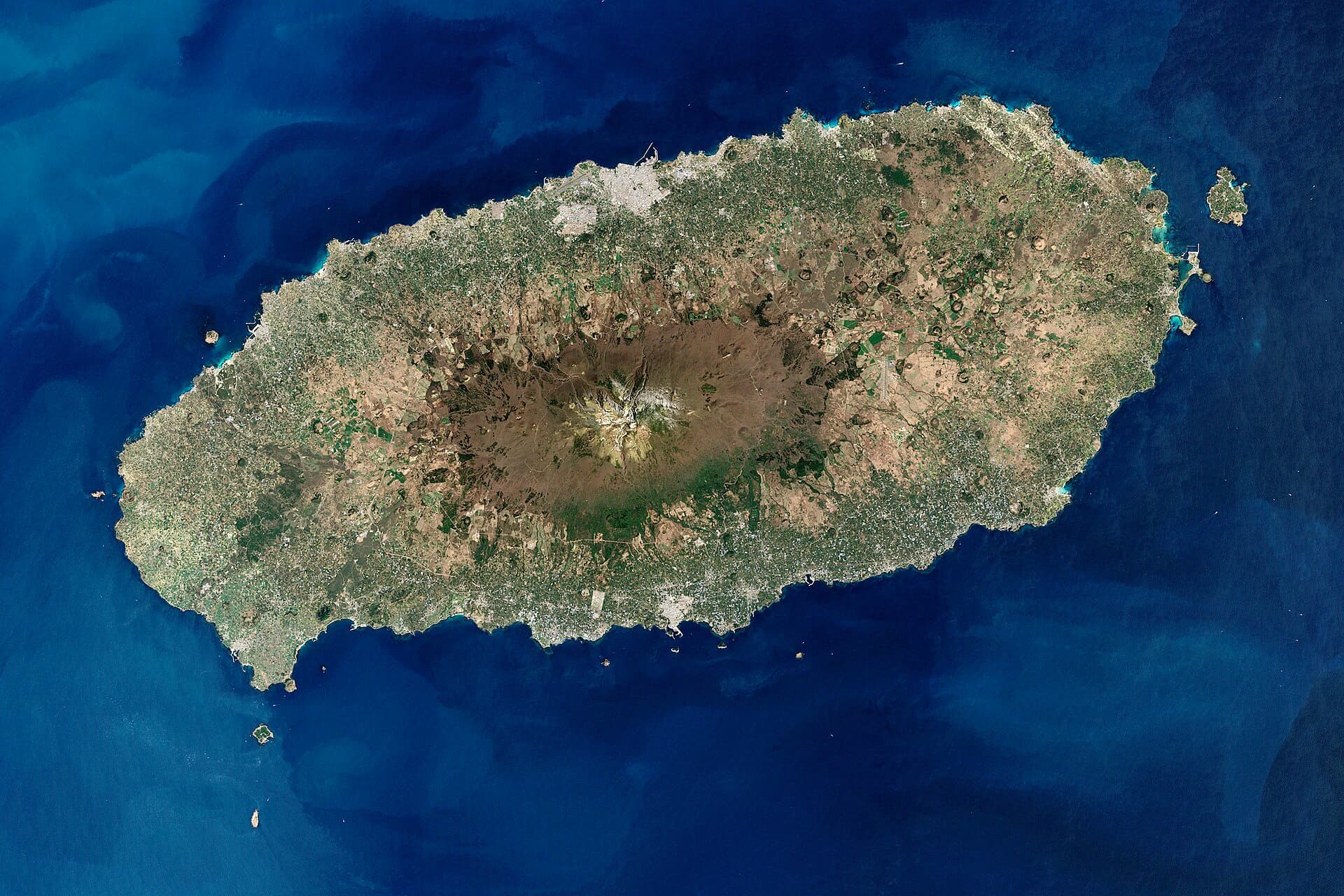
Jeju was built by volcanic eruptions, and its shape still shows it: Hallasan sits at the centre, with a summit crater lake called Baengnokdam, and more than 360 small volcanic cones called oreum dot the slopes. Underground, lava once flowed through tubes that can now be explored. UNESCO inscribed Jeju Volcanic Island and Lava Tubes on the World Heritage List in 2007.
Samdado: stones, wind and women
Jeju has long been nicknamed Samdado, the island of "three abundances": stones, wind and women. Black volcanic stone is everywhere, from field walls to statues. Strong winds shape the weather, and the island's women, especially the haenyeo divers, have long been central to its economy and culture.
Why Jeju is a world-class destination
- UNESCO recognition: three international designations in one small island.
- Variety in a small area: a mountain, lava tubes, cliffs, waterfalls, beaches and forests, all within a few hours' drive.
- Walking culture: the Jeju Olle Trail, inspired by Spain's Camino de Santiago, opened its first route in 2007.
- Living heritage: the haenyeo, women who free-dive for seafood without oxygen tanks, were inscribed on UNESCO's intangible heritage list in 2016.
- Food: black pork, Hallabong citrus, abalone porridge and very fresh seafood.
- Easy access: about an hour by air from Seoul, a route often ranked among the busiest in the world.
Best places to visit in Jeju
Hallasan National Park
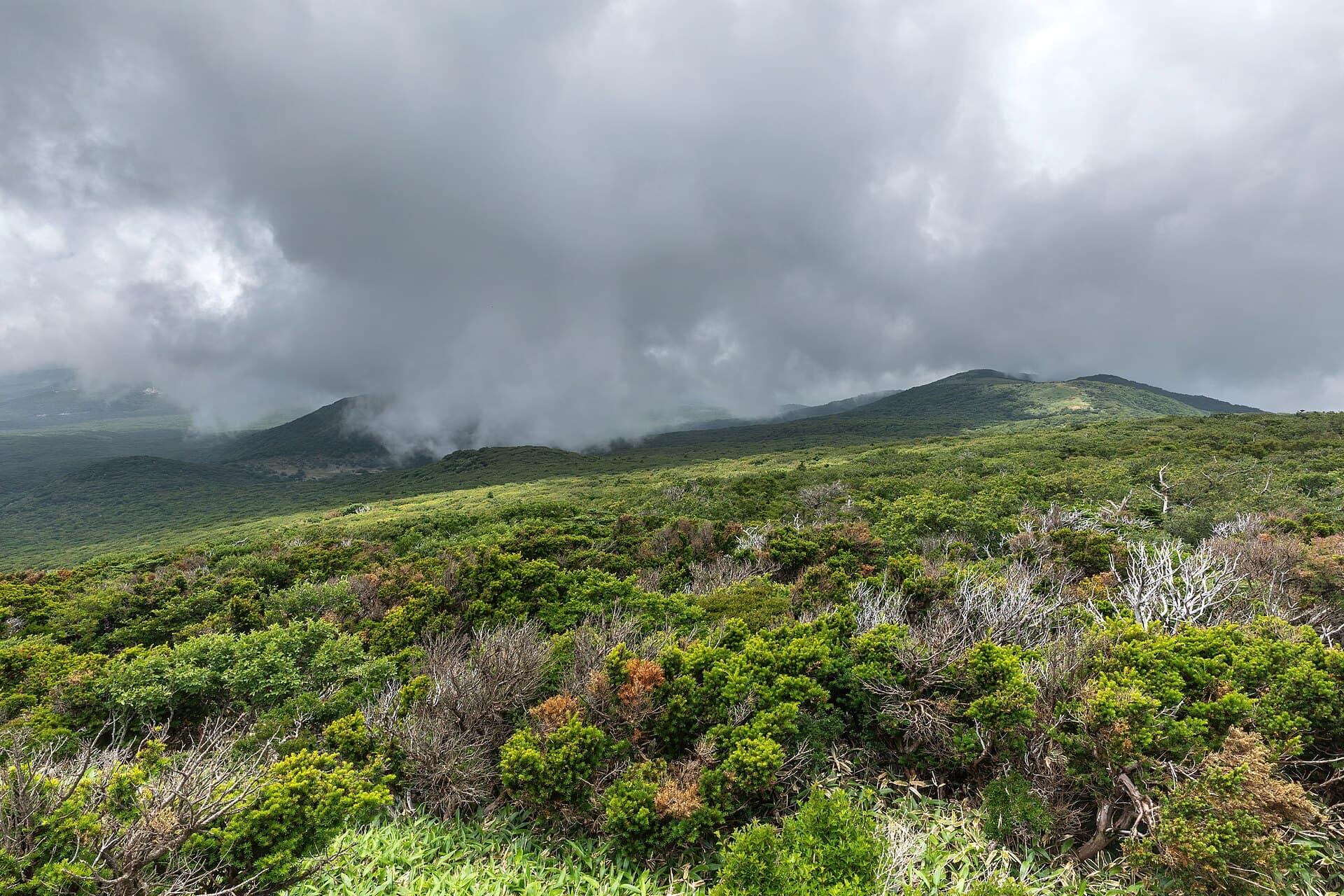
At 1,947 m (often rounded to 1,950 m), Hallasan is South Korea's highest mountain and a dormant volcano. Two trails, Seongpanak (about 9.6 km, longer but gentler) and Gwaneumsa (about 8.7 km, steeper), lead to the summit and its crater lake. Other trails, such as Yeongsil, end at lower viewpoints and still give big views. Summit hikes require advance online reservations, so check the official Hallasan page for current rules.
Seongsan Ilchulbong (Sunrise Peak)
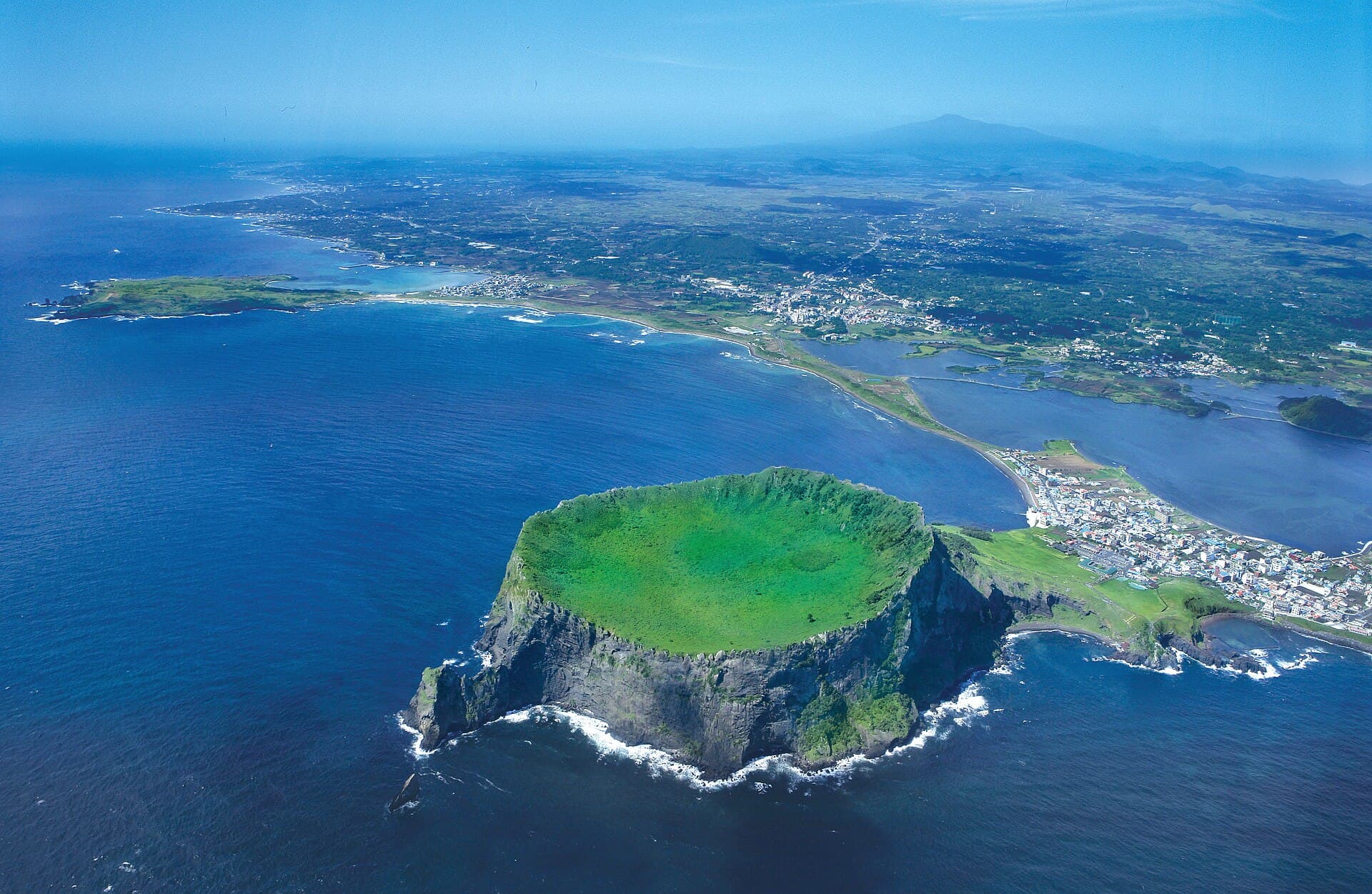
Seongsan Ilchulbong is a 182 m tuff cone that rises straight out of the sea at the island's eastern tip, and its name means "Sunrise Peak". The climb takes about 30 minutes, and the bowl-shaped crater and ocean views make it one of Jeju's most photographed places. It is part of the World Heritage property.
Manjanggul Lava Tube
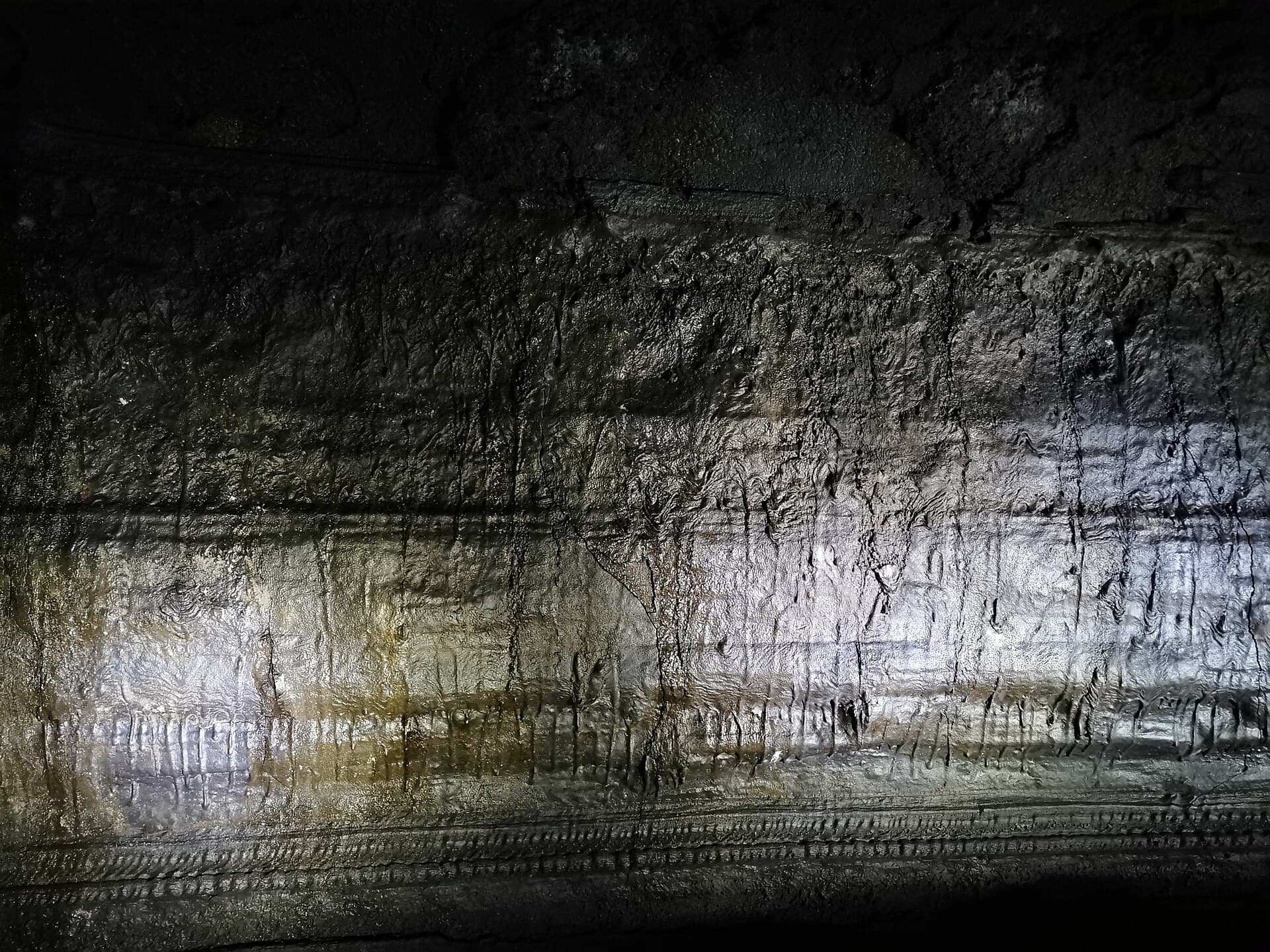
Manjanggul is part of the Geomunoreum lava tube system, one of the finest lava tubes in the world. Only a section of about one kilometre is open to visitors, and the temperature inside stays cool all year, so bring a light jacket.
Daepo Jusangjeolli Cliff
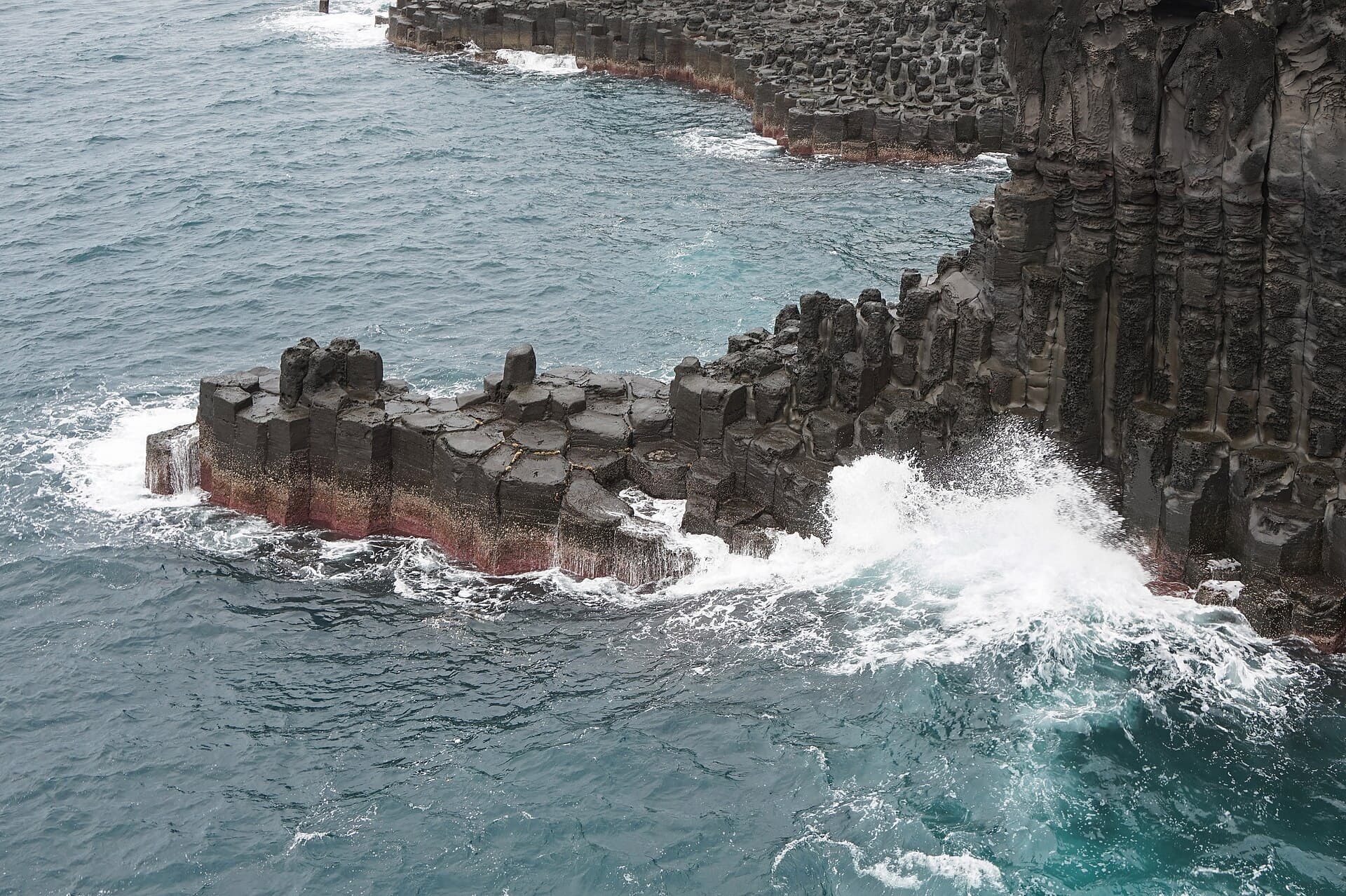
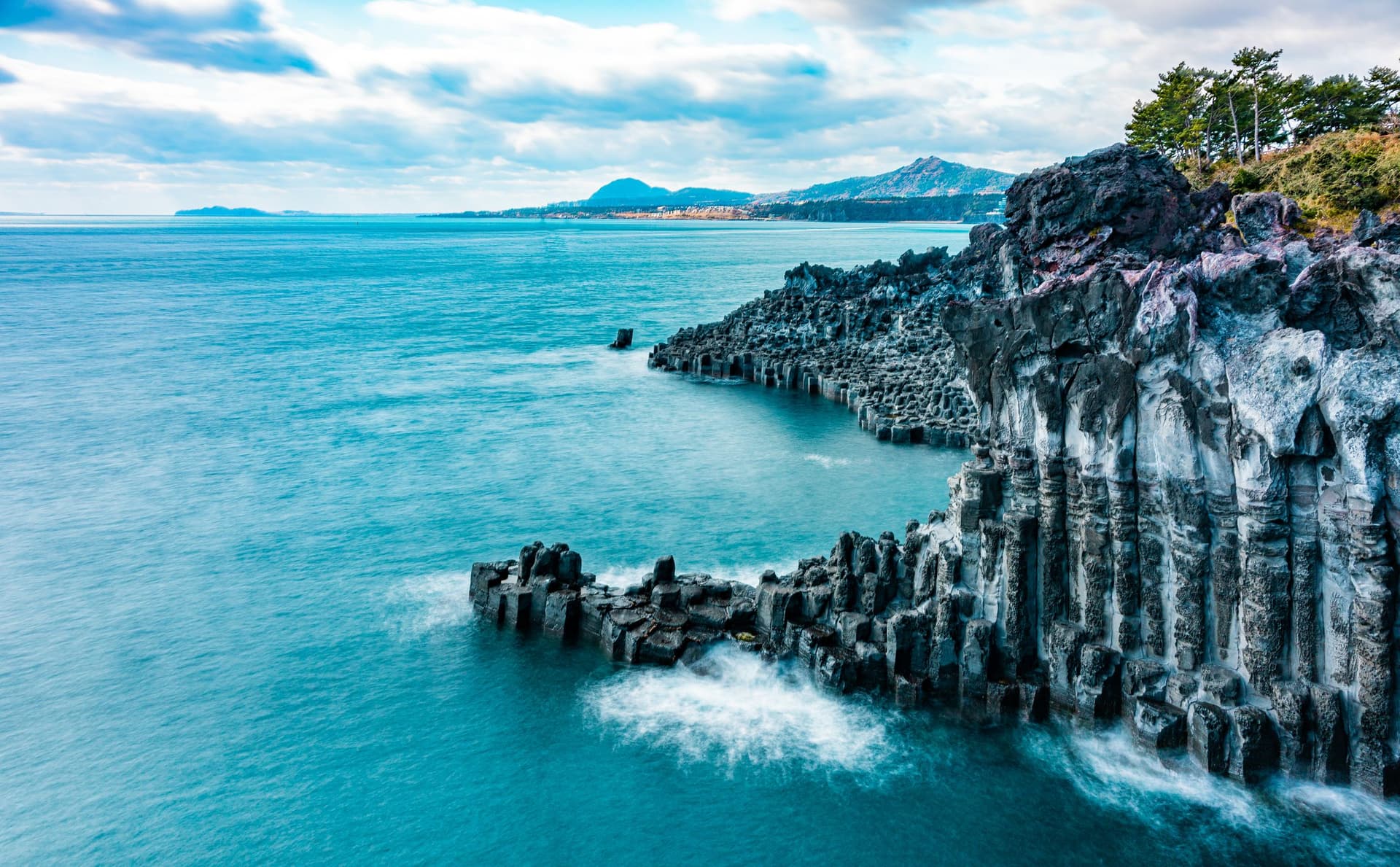
On the south coast in Jungmun, hexagonal basalt columns formed when lava cooled and cracked, and waves now crash against them. Walkways and viewing platforms make it an easy stop, and it pairs well with nearby Jungmun beaches and waterfalls.
Dol hareubang: Jeju's stone grandfathers
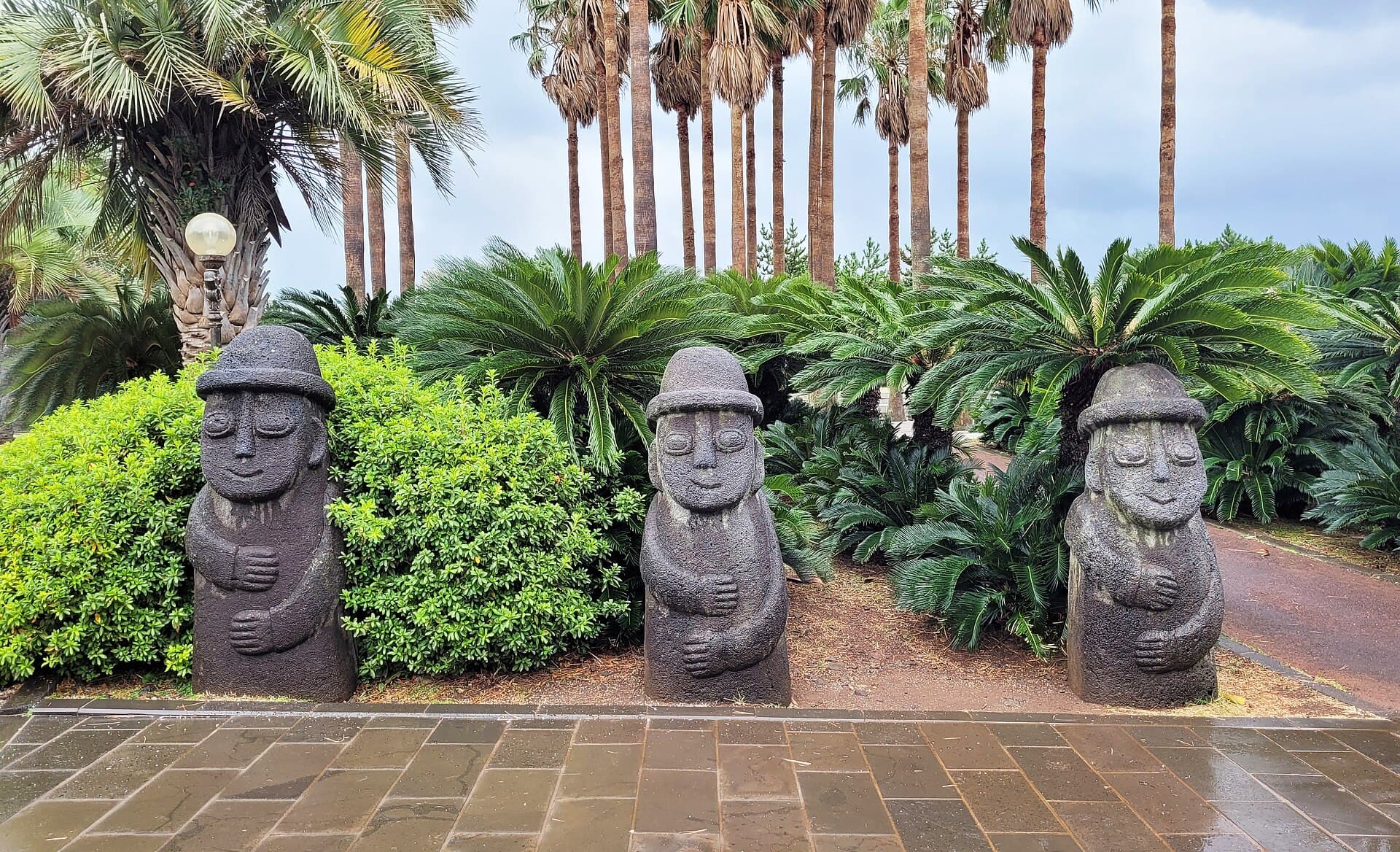
Carved from volcanic basalt, the dol hareubang ("stone grandfather") statues stand across the island as guardians. You will find them at gates, parks and museums, and they have become a symbol of Jeju.
Cheonjiyeon and Jeongbang waterfalls
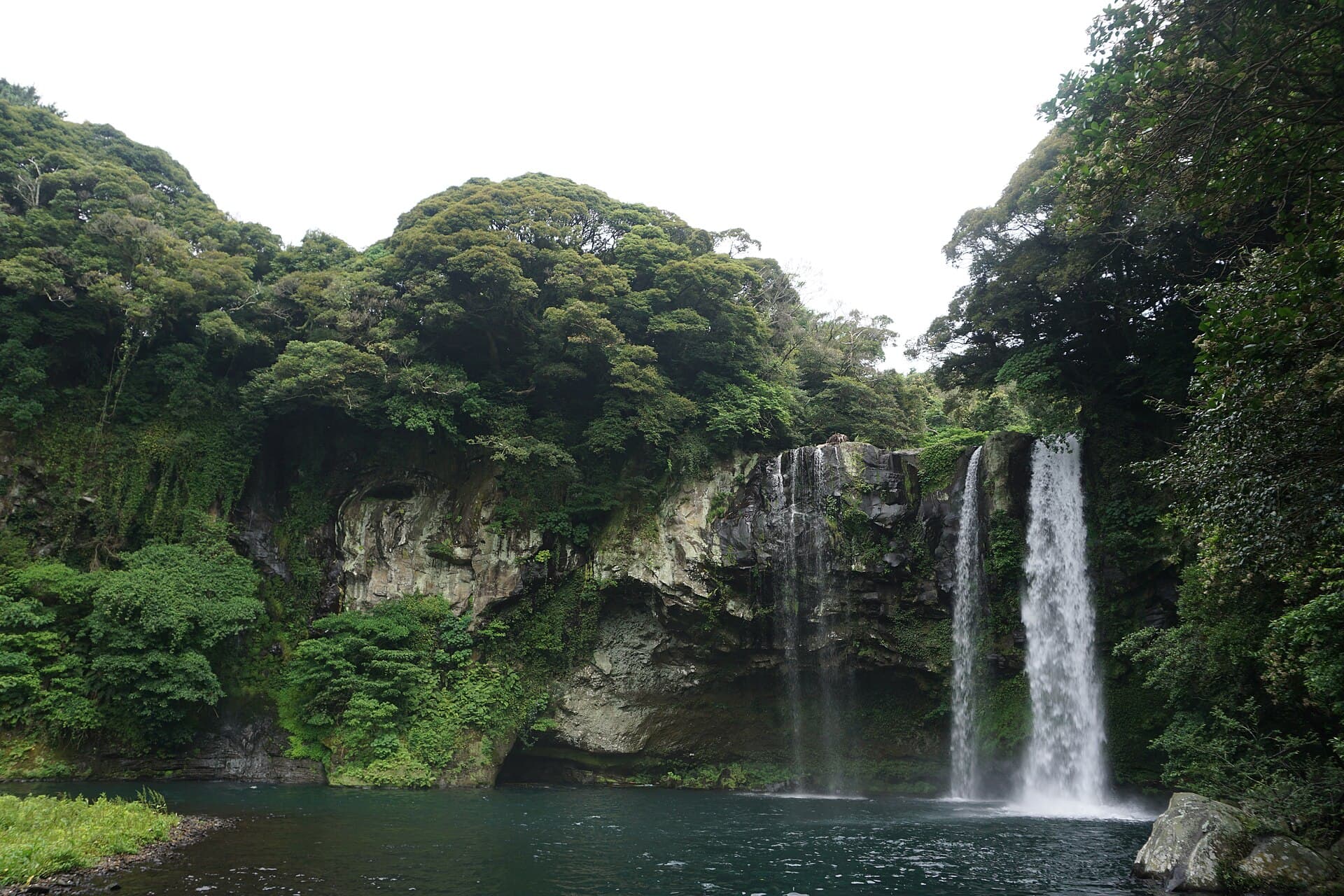
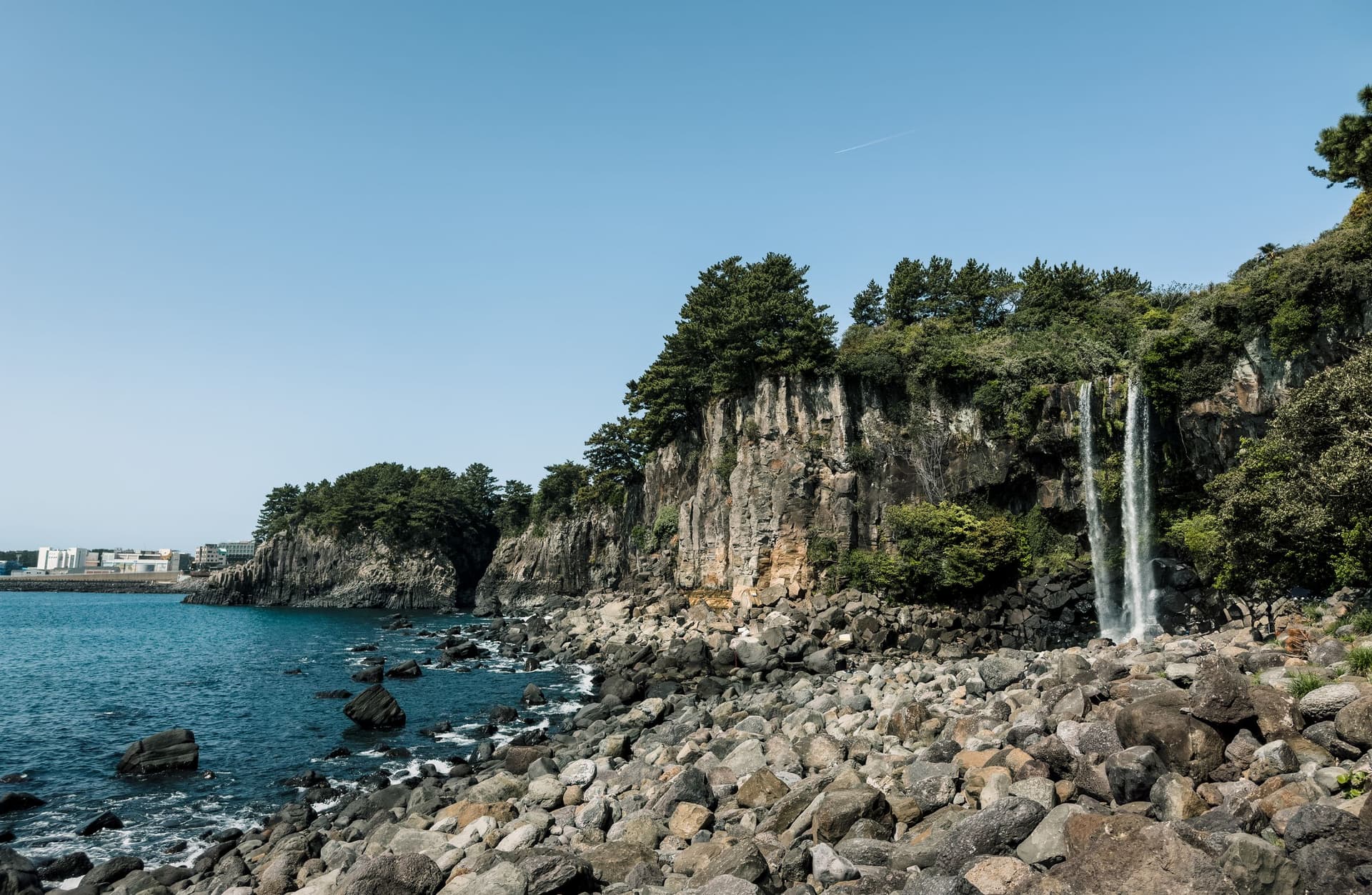
Seogwipo, on the southern coast, is known for its waterfalls. Cheonjiyeon drops through lush subtropical forest along an easy path, while Jeongbang drops beside the shoreline, close to the sea.
Hyeopjae Beach and the west coast
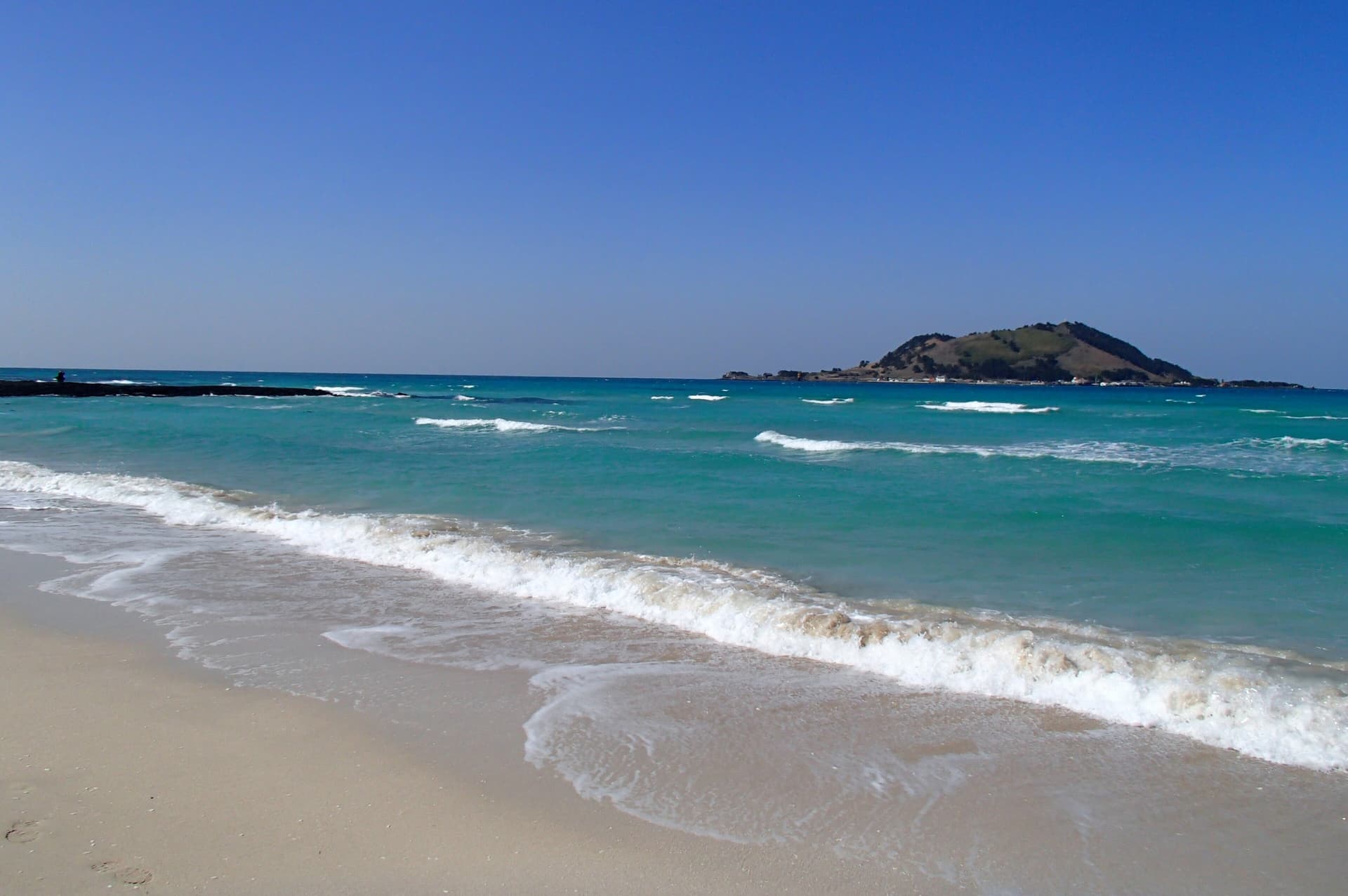
Hyeopjae is one of Jeju's best-known beaches, with shallow turquoise water and pale sand, and a small island visible offshore. The west coast is also a popular place to watch the sunset.
Meet the haenyeo
The haenyeo are Jeju's women divers, who gather seafood by free-diving without oxygen tanks. UNESCO inscribed Jeju haenyeo culture on the Representative List of the Intangible Cultural Heritage of Humanity in 2016. The island once had up to about 23,000 divers in 1965, but only about 4,300 were left by 2016, so the tradition is fragile. Haenyeo performances and museums on the east and north coasts are a respectful way to learn about them.
Dongmun Traditional Market
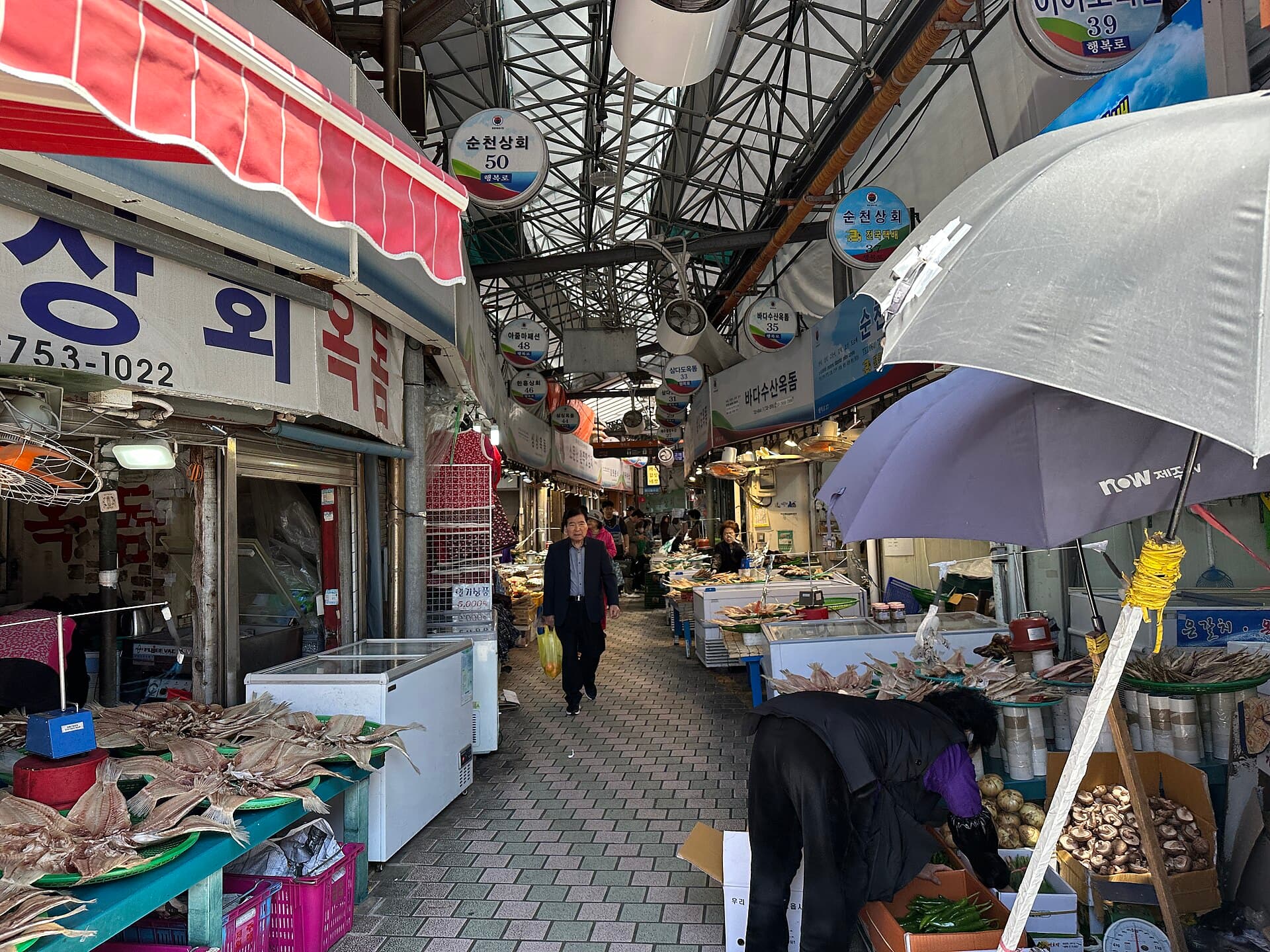
Near Jeju City's old centre, Dongmun Traditional Market is a good place to try fresh seafood, tangerines and local snacks, and to see everyday island life.
What to eat in Jeju
- Black pork (heukdwaeji): a Jeju specialty, usually grilled at the table.
- Hallabong: a sweet Jeju citrus fruit, sold fresh and as juice.
- Abalone porridge (jeonbokjuk): a comforting dish made with abalone harvested from local waters.
- Fresh seafood and raw fish: best near the harbours and markets.
- Jeju tangerines: the island is famous for its orchards, especially in winter.
How to get to and around Jeju
- By air: the Seoul to Jeju route takes about an hour, and there are also direct international flights from several Asian cities.
- By sea: ferries link Jeju with ports on the mainland, such as Mokpo and Wando.
- By car: a rental car is the most flexible way to reach the oreum, beaches and waterfalls. Foreign drivers usually need an international driving permit, so check the rules for your licence.
- By bus and taxi: a bus network and taxi tours cover the main sights if you prefer not to drive.
Best time to visit Jeju
Spring (March to April) brings canola flowers and cherry blossoms. Summer is good for beaches, but expect humidity and a rainy spell around late June and July, with typhoons possible in late summer. Autumn (October) brings silver grass across the oreum and clear hiking weather. Winter brings camellias and, on Hallasan, snow. Weather changes quickly on Jeju, so pack layers in every season.
A 3-day Jeju itinerary
- Day 1, morning: Dongmun Traditional Market and Jeju City.
- Day 1, afternoon: Hyeopjae Beach and a west coast sunset.
- Day 2, morning: Manjanggul Lava Tube.
- Day 2, afternoon: Seongsan Ilchulbong and a haenyeo experience.
- Day 3, morning: Daepo Jusangjeolli, Cheonjiyeon and Jeongbang waterfalls on the south coast.
- Day 3, alternative: a full-day Hallasan hike if you have a reservation and good weather.
This plan covers the main sights with short drives. If you have more days, add an Olle Trail section or an oreum climb.
Practical tips
- Check entry rules for your passport. Jeju has had special visa-free arrangements for many nationalities, with conditions such as staying on the island, and Korea's K-ETA exemptions have been extended year by year, so confirm the latest details on the official K-ETA site and with the Korean embassy.
- Reserve Hallasan summit trails in advance and start early.
- Bring a windproof jacket and a light rain layer, even in summer.
- Respect the haenyeo: ask before photographing divers at work.
- Book a rental car and popular restaurants early in peak seasons.
Frequently asked questions
Where is Jeju Island?
Jeju Island lies off the southern coast of South Korea. It is the country's largest island and forms the Jeju Special Self-Governing Province, with Jeju City in the north and Seogwipo in the south.
Why is Jeju Island so famous?
Jeju is famous for its volcanic landscapes, three UNESCO designations, Hallasan, Seongsan Ilchulbong, lava tubes, beaches, waterfalls, haenyeo divers and food such as black pork and Hallabong.
What are Jeju's three UNESCO designations?
A Biosphere Reserve (2002), a World Natural Heritage site called Jeju Volcanic Island and Lava Tubes (2007) and a Global Geopark (2010). The haenyeo culture is separately listed as intangible cultural heritage (2016).
How many days do you need in Jeju?
Three days is enough for the highlights, and four or five days let you add a Hallasan hike, an Olle Trail section and slower beach time.
Do I need a visa for Jeju?
It depends on your passport. Jeju has special visa-free rules for many nationalities, with conditions, and K-ETA rules have changed repeatedly. Check the official K-ETA website and your nearest Korean embassy before booking.
Is Hallasan hard to climb?
The summit trails are about 8 to 10 km one way and take most of a day. Seongpanak is longer but gentler, and Gwaneumsa is steeper. Advance reservations are required, and weather can close trails.
Final thoughts
Jeju proves that a small island can offer a lot: volcanic landscapes recognised by UNESCO, a mountain you can hike in a day, coastlines for every mood and a culture that still honours its women divers. With three days and a little planning, it is one of Asia's most rewarding trips.