The Fat Loss Pyramid: 5 Priorities for Men and Women, From Calories to Cardio
 Muhammad Fikri Gunawan · · 8 min read

The fat loss pyramid ranks the habits that matter most for both men and women: a calorie deficit first, then protein, strength training, sleep and cardio. Here is how much of each you need, and a simple weekly plan.
Quick answer: what is the fat loss pyramid?
The fat loss pyramid ranks the habits that drive fat loss from most to least important: 1) a calorie deficit, 2) enough protein, 3) strength training, 4) sleep and 5) cardio. The idea is to get the big levers right first, instead of chasing small tricks while the basics are missing. Every layer still matters, but the lower layers matter more. The same priorities apply to women and men; only the exact numbers differ.
This guide explains each layer in plain language, with practical numbers, a simple weekly plan and the mistakes to avoid. It is general education, not medical advice. If you have a health condition, are pregnant, are under 18, take medication or have a history of disordered eating, talk to a doctor or registered dietitian before changing how you eat or train.
Key takeaways
- Fat loss needs a calorie deficit. Nothing else works without it.
- Protein of about 0.7 to 1 gram per pound (1.6 to 2.2 grams per kilogram) of body weight helps protect muscle and keeps you fuller.
- Strength training 2 to 5 times a week tells your body to keep muscle while you lose fat.
- Sleeping 7 or more hours a night keeps hunger and recovery in check.
- Cardio is the least important layer for fat loss itself, but it is still great for your heart and mood.
The fat loss pyramid at a glance
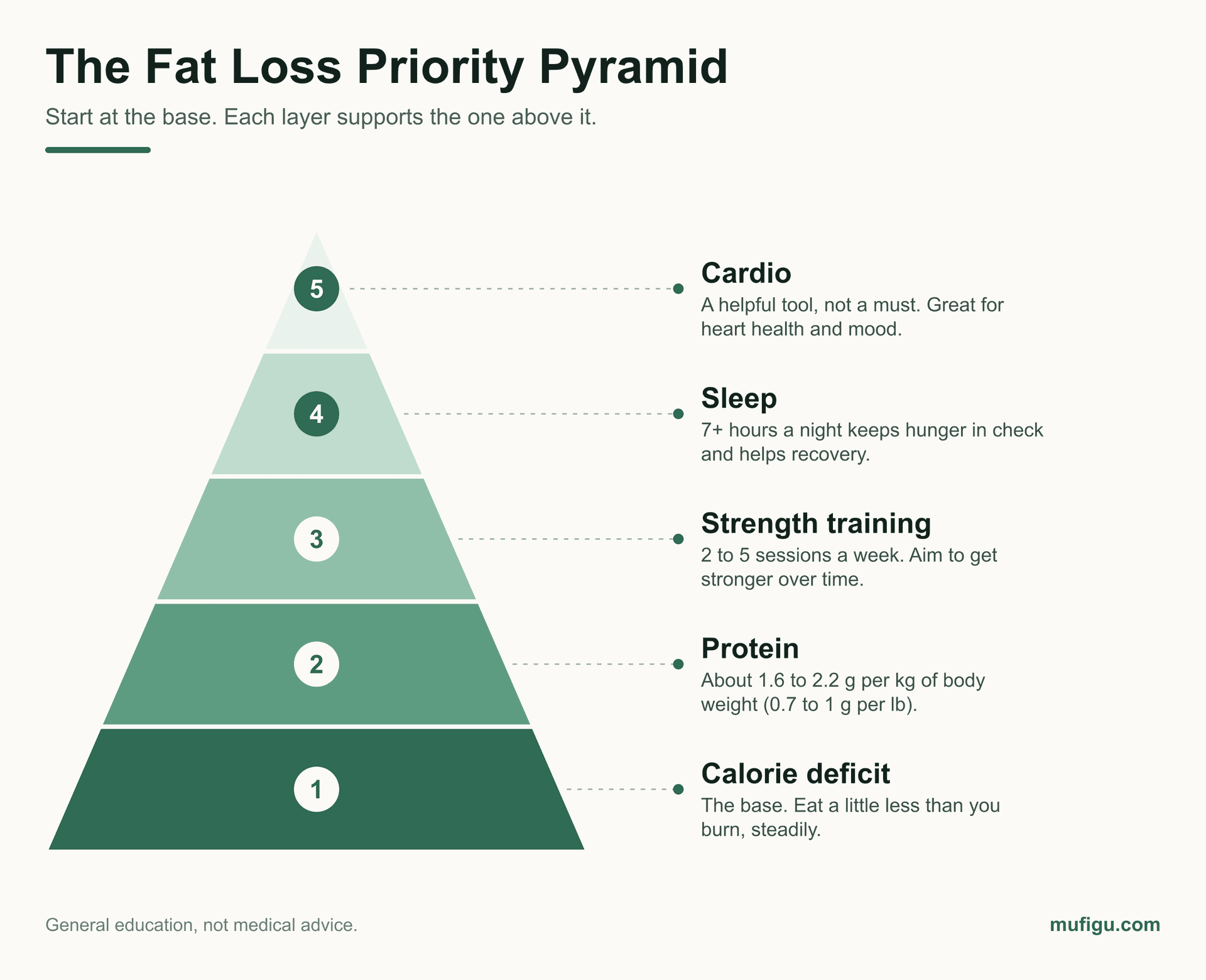
The fat loss numbers at a glance
- Calorie deficit: about 0.5 to 1 kg (1 to 2 pounds) of fat loss per week is a steady pace.
- Protein: about 1.6 to 2.2 g per kg (0.7 to 1 g per lb) of body weight per day.
- Strength training: 2 to 5 sessions a week, 30 to 60 minutes each.
- Sleep: 7 or more hours a night for adults.
- Cardio: about 150 minutes of moderate activity a week for general health.
1. Calorie deficit: the base of the pyramid
Body fat goes down when you regularly eat fewer calories than your body uses. That is the only mechanism, and every diet that works, from low-carb to intermittent fasting, works because it makes a deficit easier to keep.
A common starting estimate is to multiply your current weight in pounds by 10 to 12 to get a daily calorie target. For a 180 lb (82 kg) person that is about 1,800 to 2,160 calories. Treat it as a rough starting point, not a rule, because height, age, sex and activity change the real number.

How to set and adjust your deficit
- Pick a starting target using the estimate above.
- Weigh yourself most mornings and watch the weekly average, not single days.
- Aim for a steady loss of about 0.5 to 1 kg (1 to 2 pounds) a week. Slower is fine.
- If the average does not move for 2 to 3 weeks, lower your calories by 100 to 200.
- Recalculate every 2 to 4 weeks as your weight changes.
Safety note: if the target looks very low for you, or you feel dizzy, weak or constantly exhausted, stop and talk to a professional. Very low calorie diets should be supervised by a doctor.
2. Protein: protect muscle and stay full
Aim for roughly 0.7 to 1 gram of protein per pound of body weight (about 1.6 to 2.2 grams per kilogram) each day. Research on people who train and eat in a deficit suggests that intakes in this range help preserve muscle, and protein also keeps you fuller than carbs or fat. A 150 lb (68 kg) person would aim for about 105 to 150 grams. The rest of your calories can come from whatever mix of carbs and fats you prefer.

- Easy sources: eggs, chicken, fish, lean meat, Greek yogurt, tofu, tempeh, beans and lentils.
- Spread protein over 3 or 4 meals instead of eating it all at dinner.
- If you have kidney disease or another medical condition, ask your doctor before raising your protein.
3. Strength training: lift to keep your muscle
Lifting weights 2 to 5 times a week, in sessions of 30 to 60 minutes, gives your body a reason to keep muscle while you eat less. Focus on getting a little stronger over time by adding reps or weight. Public health guidelines also recommend muscle-strengthening activity on at least 2 days a week.


A simple beginner routine is 3 full-body sessions a week built from five movements:
- Squat or leg press.
- Hinge: deadlift, Romanian deadlift or hip thrust.
- Push: push-up or overhead press.
- Pull: row or pull-down.
- Carry or core: farmer carry or plank.
Start light, learn the movements, and progress gradually. A qualified trainer can help if you are new.
4. Sleep: the quiet multiplier
Sleep is not glamorous, but short sleep makes dieting harder. Sleep experts recommend that adults regularly get 7 or more hours a night, and chronic short sleep is linked with higher hunger, weaker recovery and weight gain. Many people do best with 7 to 9 hours.

- Keep a consistent bedtime and wake time.
- Stop caffeine at least 6 to 8 hours before bed.
- Dim the lights and put screens away 30 to 60 minutes before sleep.
- Keep the bedroom cool, dark and quiet.
5. Cardio: helpful, but not the main driver
Cardio is a useful tool, not a requirement for fat loss. It burns calories, supports heart health and mood, and can make it easier to stay active. But you cannot out-run a diet with no deficit, and the lower layers do most of the work. For general health, adults are advised to get about 150 minutes of moderate activity a week, and brisk walking counts.
A simple weekly plan
- Every day: eat to your calorie target, hit your protein, sleep 7 or more hours and walk when you can.
- Monday, Wednesday and Friday: a 40 to 60 minute strength session.
- Tuesday and Saturday: 30 to 45 minutes of easy cardio or a long walk.
- Sunday: rest, plan your meals and review your weekly weight average.
Common mistakes
- Doing lots of cardio and little strength training, then losing muscle along with fat.
- Cutting calories too hard, which leads to binges and burnout.
- Judging progress by one day of weight instead of a weekly average.
- Skipping protein, then feeling hungry all day.
- Ignoring sleep and stress.
- Changing everything at once instead of building one layer at a time.
Frequently asked questions
Is a calorie deficit the only way to lose fat?
Yes. A sustained calorie deficit is what drives fat loss. Protein, lifting, sleep and cardio make the deficit easier to keep and help you hold on to muscle, but they do not replace it.
How much protein do I need to lose fat?
About 0.7 to 1 gram per pound of body weight (1.6 to 2.2 grams per kilogram) per day is a common and well-supported range for people who train. Check with a doctor first if you have a kidney condition.
How many days a week should I lift weights?
Between 2 and 5 days. Beginners do well with 2 or 3 full-body sessions of 30 to 60 minutes, then add more as they recover well.
Do I need cardio to lose fat?
No. Cardio helps with heart health, mood and daily activity, but fat loss comes mainly from the calorie deficit. Walking is a simple place to start.
How fast should I lose fat?
A steady pace of about 0.5 to 1 kg (1 to 2 pounds) a week is commonly recommended. Faster loss is harder to sustain and can cost muscle.
How many calories should I eat to lose fat?
There is no single number. A rough starting point is your weight in pounds multiplied by 10 to 12, then adjust using your weekly weight trend. If you are unsure, ask a doctor or registered dietitian.
Does the fat loss pyramid work for both men and women?
Yes. The priorities are the same for women and men: a calorie deficit first, then protein, strength training, sleep and cardio. The exact calorie and protein numbers differ with body size, age and activity. Women who are pregnant or breastfeeding should talk to a doctor first.
Final thoughts
Fat loss is easier when you work on the right things in the right order. Set a modest calorie deficit, eat enough protein, lift weights, protect your sleep and add cardio for health, and you will have the habits that matter most. Be patient, track your trend and adjust slowly.
Related reading: try a high-protein dinner like honey garlic shrimp, and build consistency with 8 Japanese techniques to overcome laziness.